

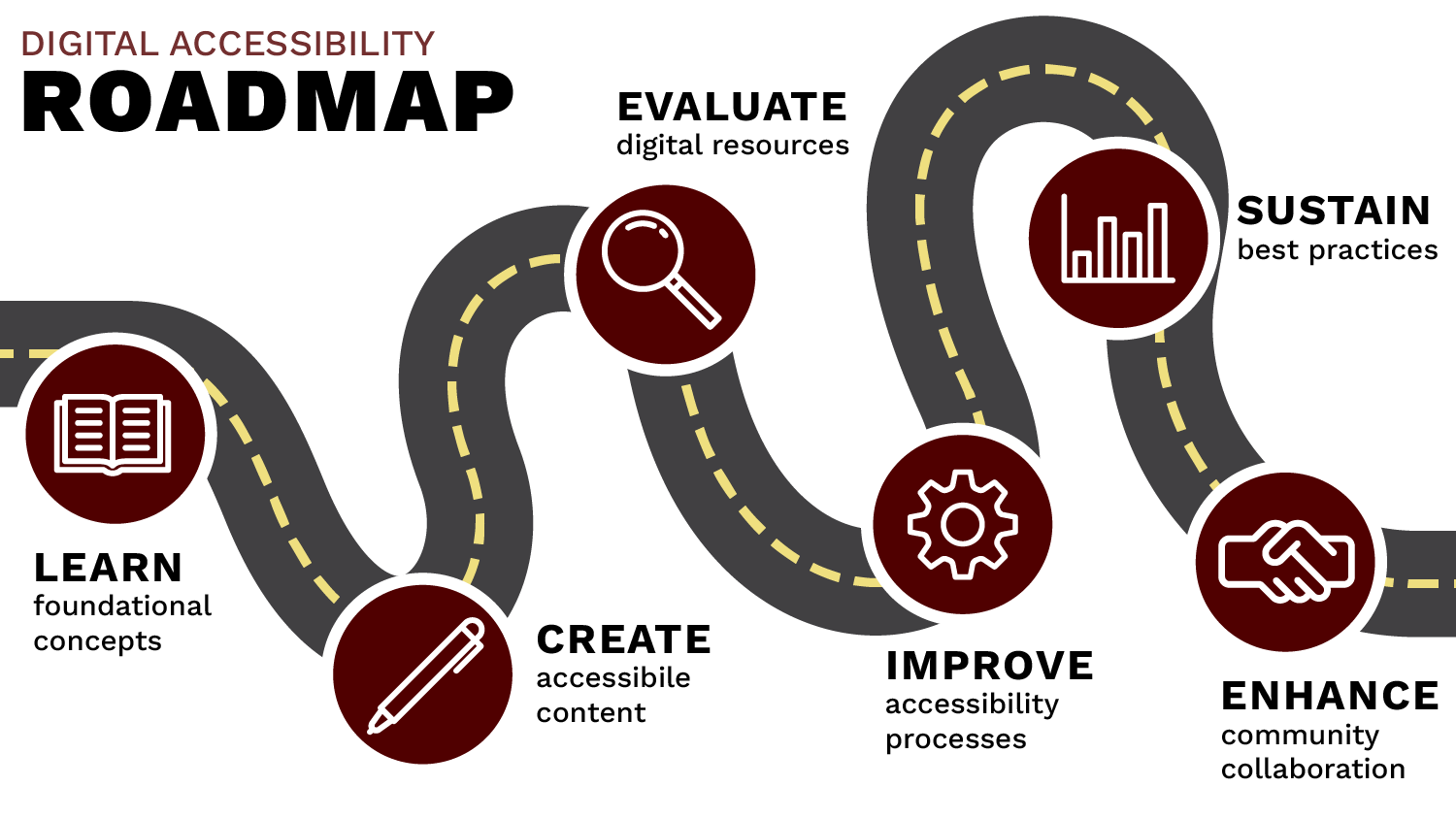
The Roadmap Explained
Step 1 Learn Foundational Concepts
Developing a clear understanding of digital accessibility principles, standards, and user needs provides the foundation for everything that follows. This step helps ensure that decisions about content and design are informed by how people actually interact with digital resources, including those using assistive technologies.
Step 2 Create Accessible Content
Accessibility is most effective when it is built into content from the beginning. By applying best practices — such as using proper structure, meaningful link text, and accessible media — content creators can reduce barriers early and produce resources that are easier for everyone to use.
Step 3 Evaluate Digital Resources
Reviewing existing websites, documents, and applications helps identify accessibility gaps and areas for improvement. This process provides insight into common issues and helps prioritize what should be addressed first.
Step 4 Improve Accessibility Processes
Once issues are identified, organizations can refine their workflows and tools to support better outcomes. This may include updating templates, incorporating accessibility checks into review processes, and establishing consistent guidelines for content creation.
Step 5 Sustain Best Practices
Accessibility is not a one-time effort but an ongoing commitment. Regularly reviewing content, staying informed about evolving standards, and continuously improving processes help ensure that digital resources remain usable and effective over time.
Step 6 Enhance Community Collaboration
Accessibility is a shared responsibility. Collaboration across teams — such as content creators, IT staff, and accessibility specialists — helps ensure consistent practices and encourages knowledge sharing across the organization.